
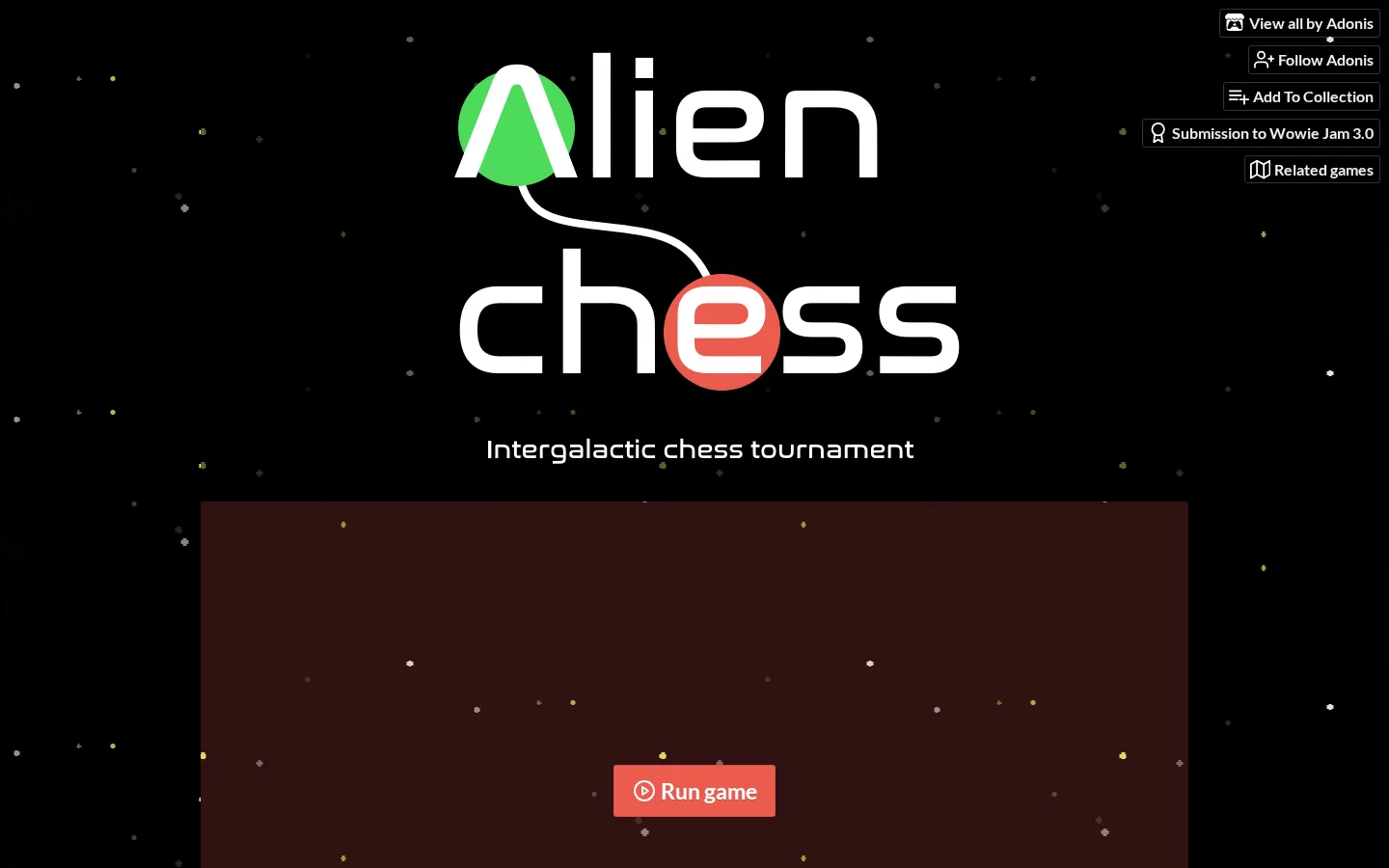
Alien Chess keeps the board and royal objective but hides how its pieces move. You learn each strange pattern only after the opponent demonstrates it, then carry that knowledge into the next match. The result is a compact deduction game with a terrific central trick, a deliberately bewildering opening, and an opponent whose short-term thinking can be as alien as the rules.
What is Alien Chess?
A familiar chessboard is usually a promise: even before the first move, both players know what every piece can do. Alien Chess breaks that promise. Its pieces arrive without instructions, and the opponent must reveal their movement one specimen at a time. A bad match is therefore not wasted; it becomes reconnaissance for the rematch. That twist is small enough to grasp and mischievous enough to scramble ordinary chess instincts. Planning gives way to observation, experimentation, and occasional mimicry while the randomized rules keep a single solved route from settling in. This is a 72-hour jam game, and its seams show: early explanation can be confusing, the computer opponent evaluates shallowly, and old player reports mention match-state trouble. The idea nevertheless earned the top creativity rank in a 969-entry jam, which feels less like hype than a clean verdict on one very good mutation.
What you can do there
- Watch the opponent reveal piece movement
- Test unfamiliar moves
- Adapt strategy between matches
- Capture the opposing crown piece
Why we picked it
It turns losing into a practical information system. Instead of merely randomizing a chessboard, the game makes discovery itself the strategy, so each opponent move changes what you know and what you can attempt next.
How to get the most from it
Spend the opening moves watching rather than forcing a standard chess plan. Note which alien piece demonstrates each pattern, test newly learned movement carefully, and treat a loss as a scouting report. Rematches are where the board should begin to make sense.
Good to know
This is a short browser-based jam game made with Godot. It has creator-made sound effects but no music. Independent jam feedback praised the concept while flagging initial confusion, a weak computer opponent, and occasional soft locks in the original build; current behavior was not interactively retested.
Who made it, and when?
Adonis is the credited creator or organization.
Creator’s official page Open Alien ChessMore like this
Close Hue

A daily test of whether ‘mauve’ in your head has any relationship to mauve on a screen.
Sudoku.com

Six difficulty rungs, pencil notes, and a daily grid—with a three-strike rule
Riddle of the Day

One thoughtful logic problem a day, with an archive for second helpings.
Dino Pal

Five tiny conference warm-ups disguised as a puzzle box with a very large logo on it.