
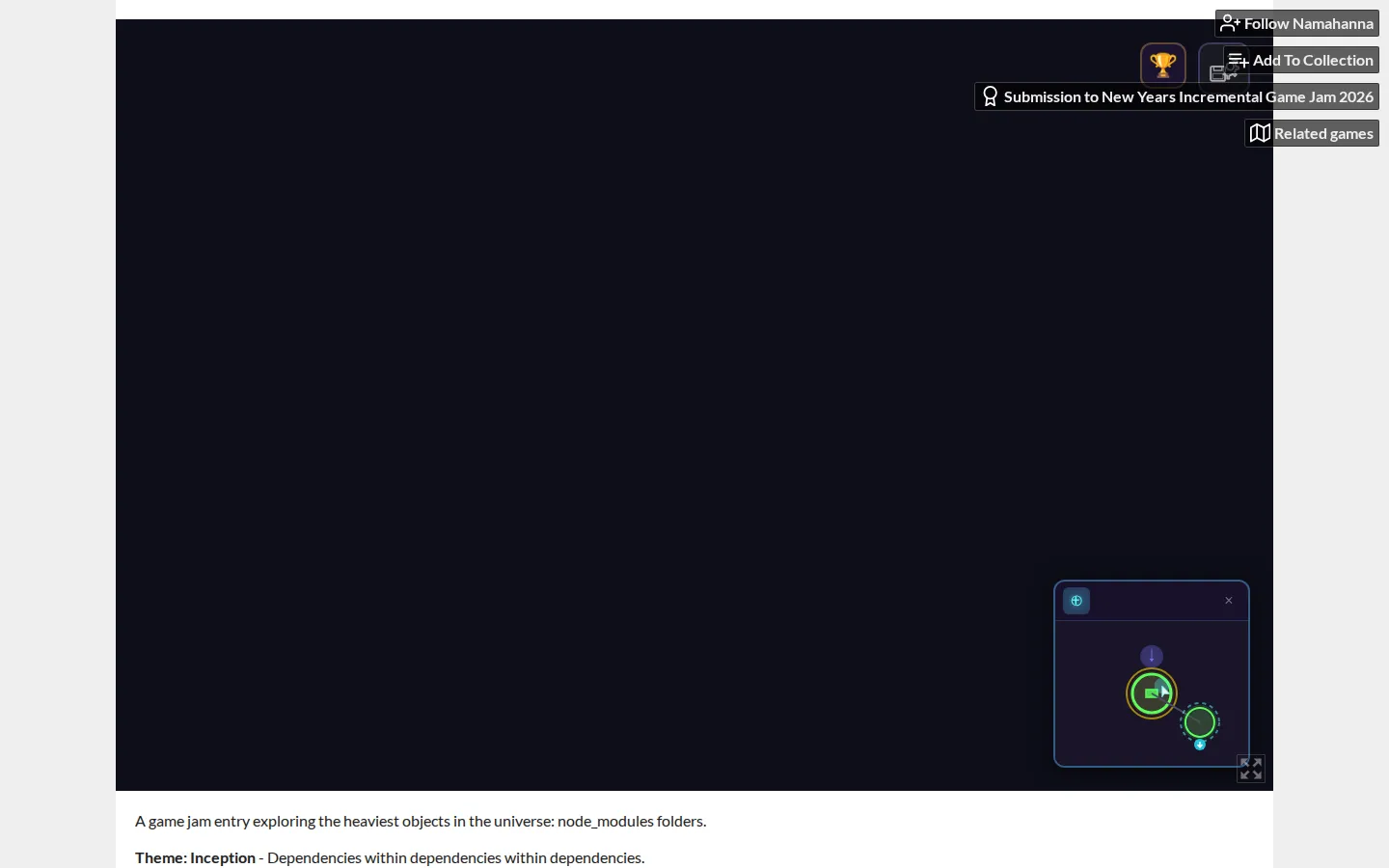
This short browser game turns an overstuffed node_modules folder into an abstract incremental puzzle. You open nested packages, snip conflicts, merge duplicates, and ship accumulated weight, all while the interface tries to teach you with motion and symbols instead of a wall of text.
What is The Heaviest Objects in the Universe?
A single root blossoms into circles, wires, warning marks, and yet more roots tucked inside the packages you just opened. Clicking downward reveals the joke and the structure at once: every dependency can contain another dependency tree. The work is part garden pruning, part build-system exorcism. Clearing red-wire conflicts and dragging matching packages together pushes the weight bar toward another shipment, which buys access to deeper tiers and eventually a collapse finale. Its strongest trick is making software clutter look oddly elegant. The same visual-first design can also be slippery; if the symbols do not click, the machine may feel mysterious longer than intended.
What you can do there
- Spawn and inspect nested dependency packages
- Resolve conflicts and merge duplicate packages
- Ship accumulated weight to unlock deeper tiers
Why we picked it
The premise is unusually specific and the visual metaphor does real work. Recursive package management becomes something you can poke, sort, and watch unfold, while the jam results back up the concept's originality even as its lower balance score hints at genuine rough edges.
How to get the most from it
Start at the root, then open packages one layer at a time. Clear red X conflicts before they spread, drag matching icons with matching halos together, and watch the weight bar for the moment you can ship. Hover over unfamiliar controls and use the learning-book animations when the symbol language gets cryptic.
Good to know
This is an active incremental game, not a leave-it-running idle toy. The design deliberately withholds most text, and public feedback repeatedly flags the learning curve, so patience helps. It uses clicking, dragging, zooming, and panning; audio, keyboard access, saved progress, and current mobile comfort are not documented clearly enough to promise.
Who made it, and when?
Namahanna is the credited creator or organization. A documented update was recorded January 26, 2026.
Creator’s official page Open The Heaviest Objects in the UniverseMore like this
Bongo Cat

Use your keyboard to make an extremely committed cat play instruments and make noise.
Pointer Pointer

Move your cursor. Somewhere, a photograph contains a person pointing exactly at it.
Hacker Typer

Mash the keyboard and instantly look like the movie version of a brilliant hacker.
Cupcake Ipsum

Filler text for layouts that would rather raid the bakery.